

The word “sustainability” has long been firmly entrenched in the language and (not always) in the practices of companies across all sectors; the wine sector is no exception: climate change, growing consumer awareness, and corporate social responsibility are pushing the wine industry to radically rethink its production and economic models, rethinking every aspect of each stage of the supply chain.
But what does sustainability really mean? What are its implications in the wine sector? And what are the principles that guide sustainable viticulture?
In the following lines, we will answer these questions, focusing on Serena Wines 1881’s sustainability activities.
What is meant by sustainability and sustainability in the wine sector
The concept of sustainable development is based on the key principle formulated in 1987 by the United Nations World Commission on Environment and Development; according to this principle, sustainability means “meeting the needs of the present without compromising the ability of future generations to meet their own needs.”
This concept also encompasses three interconnected dimensions: environmental, social, and economic. Specifically:
- environmental sustainability concerns the responsible management of natural resources, environmental protection, and the fight against climate change.
- Social sustainability focuses on human well-being, equity, access to education, health, and basic services;
- economic sustainability aims to ensure long-term economic stability and growth, promoting the responsible use of resources and job creation.
In the world of wine, these concepts translate into an integrated approach that encompasses every stage of the product life cycle: from sustainable vineyard management to grape processing, from bottling to distribution, from guarantees of proper working conditions to the end consumer experience.
Sustainability in the world of wine is therefore not limited to simply reducing the use of pesticides or controlling fermentation processes in the cellar: it is an ongoing commitment that involves conscious choices based on respect for natural resources and people.
The 3 Principles of Sustainability in the Wine Sector
As mentioned, sustainability is based on three dimensions: environmental, social, and economic (also known as the “triple bottom line”).
The concrete application of these principles in the wine sector has been formalized in the sustainability certification system specifications, which introduced specific requirements for this sector. These requirements distinguish agricultural activities (Phase A) from processing activities (Phase T) and precisely define the actions to be taken to ensure the sustainability of the production process and the winery.
Considering this introduction, let’s analyze the specific characteristics of the three dimensions in the wine sector.
1.Environmental Sustainability
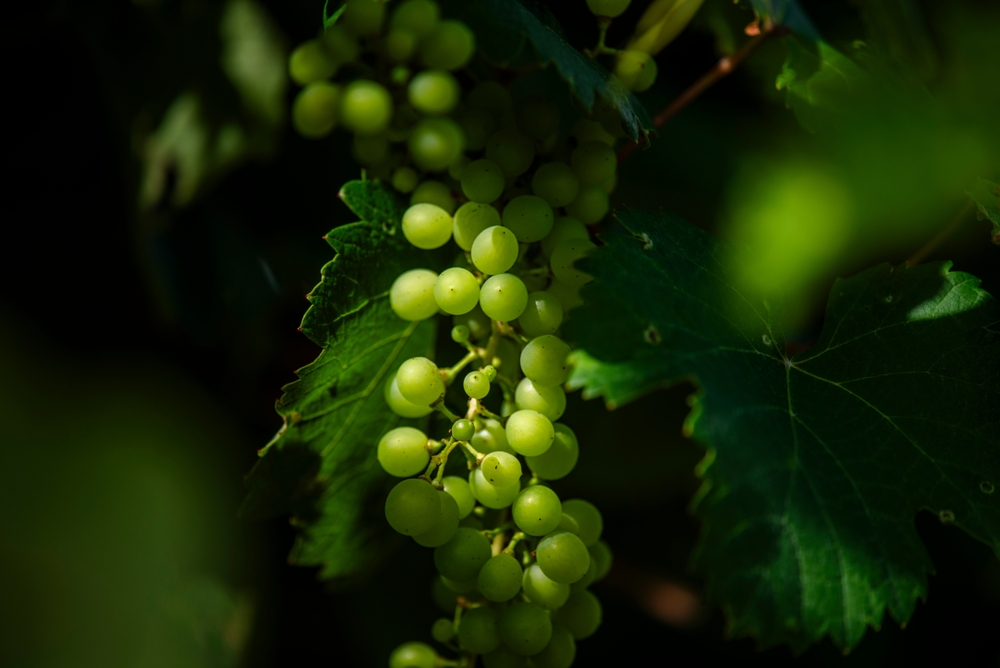
In the world of wine, the concept of environmental sustainability translates into the application of agricultural techniques and industrial processes that minimize environmental impact and promote the restoration of natural resources.
During the agricultural phase, operators must adopt tools to monitor water consumption, necessary for rational water management. Protecting the natural ecosystem is another fundamental aspect: wineries must avoid significantly reducing existing forests when planting new vineyards, manage uncultivated areas, and protect the protected species present on their land. A virtuous example is the requirement to allocate at least 1% of the company’s land to fodder crops for pollinating insects, thus promoting functional biodiversity.
During the post-harvest processing phase, environmental sustainability requires careful management of semi-natural areas such as woodlands, hedgerows, dry stone walls, and bodies of water. Conservation measures may include the creation of water reservoirs, artificial nests, or the restoration of rural landscape features.
Continuous monitoring of resources used is mandatory (this refers to energy consumption per liter of wine produced), as is the evaluation of the average weight of bottles and the use of recyclable or recycled packaging materials. The adoption of certified renewable sources is also encouraged, as it reduces emissions and improves the winery’s environmental performance.
2.Social Sustainability
Regarding social sustainability, wine production cannot ignore the well-being of those working in the supply chain and responsibility towards local communities. Compliance with the rules is not enough: it is necessary to build an inclusive, fair, and transparent system.
Consumers, increasingly aware today, are demanding greater guarantees regarding the ways in which wine is produced. Phenomena such as labor exploitation, gangmastering, and social inequalities undermine the sector’s credibility, which is why wineries are called upon to adopt active policies to ensure decent working conditions, professional training, and participation.
During the agricultural phase, social sustainability translates into compliance with employment contracts, the collection of all mandatory documentation (such as residence permits, contracts, etc.), and the creation of updated employee lists.
Staff training is another key aspect. Workers must also be raised to be aware of social and environmental sustainability issues, so they can perform their duties safely, respect the environment, and be consistent with company values. A knowledgeable workforce is also a strategic resource, capable of contributing to the company’s innovation and continuous improvement.
Social sustainability also plays a crucial role in the transformation phase. Companies must monitor workplace accidents, calculating specific indicators such as frequency and severity rates, and promote a culture of prevention and dialogue. Equally important is the connection with the local community: the company must be able to listen to its community, build a relationship of trust with it, and propose activities that benefit it.
3.Economic Sustainability
Within the context of sustainability in the wine world, the economic dimension is often the least visible; although limited to the post-harvest and processing phase, it is nevertheless as fundamental as the environmental and social aspects.
An economically sustainable winery can only be considered truly so if it can guarantee financial stability, long-term resilience, and the ability to generate value for itself, its workers, and the region in which it operates.
Economic sustainability is not limited to short-term profitability: it requires a long-term vision, based on responsible investments, production efficiency, and the ability to adapt to changes of all kinds (be they climate, technology, or market). At the same time, a sustainable winery can address global challenges thanks to a flexible, innovative management model focused on reducing waste.
As part of the sustainability certification system for the wine industry, companies are required to adopt specific behaviors that demonstrate their commitment to balanced economic development. These include the valorization of by-products and waste materials, the promotion of the circular economy, and the use of eco-friendly materials. The goal is to transform every stage of production into an opportunity to reduce costs and impacts, while simultaneously improving competitiveness.
Companies are also encouraged to engage in sponsorships or donations to external organizations, demonstrating their active role in the local socioeconomic fabric. This type of participation is not only beneficial to the company’s image, but also strengthens community ties and contributes to the creation of shared value.
Another crucial aspect is the continuous monitoring of company performance. Companies must be able to regularly assess their energy consumption, process efficiency, packaging sustainability, and personnel management. Only through informed monitoring of internal processes can they identify areas for improvement and make decisions consistent with sustainable growth.
Sustainability at Serena Wines 1881
At Serena Wines 1881, sustainability is an operating principle that permeates every aspect of the company’s operations. For us, our commitment to a more responsible production model translates into concrete actions, innovative projects, and a corporate culture that places respect for the environment, people, and the local area at its core.
The desire to evolve toward a sustainable winery has led Serena Wines 1881 to obtain Equalitas certification, one of the most comprehensive and rigorous standards in the wine industry. This recognition demonstrates the full integration of the three pillars of sustainability (environmental, social, and economic) within every stage of production, from grape cultivation to the sale of the finished product.
To ensure this, we publish our “Sustainability Report” annually, which transparently documents the results achieved and future objectives, offering a clear vision of the concrete commitment we pursue day after day.
One of the most significant examples of sustainable innovation at Serena Wines 1881 is the Cheers project, developed in collaboration with Ca’ Foscari University of Venice. In this area of advanced research, our winery has begun testing a technology that converts winemaking waste into renewable energy: a pioneering initiative that not only valorizes wine byproducts but also opens new perspectives for a more circular and low-environmental-impact supply chain.
We have also adopted sustainability-focused solutions for packaging, thanks to the RafCycle® project, which gives new life to waste from bottle labels. Silicone-coated paper, traditionally considered non-recyclable waste, is transformed into new raw material; this recovery process helps reduce the environmental footprint of packaging and represents an important step towards more efficient resource management.
Alongside innovation, Serena Wines 1881 promotes numerous sporting, social, and cultural initiatives. Sponsorships of sporting events (International Tennis Tournaments), various teams (Sportivi Ghiaccio Cortina, Imoco Volleyball, Treviso Basket), and social and cultural initiatives (FAI, TEDxConegliano, Progetti del Cuore, and Raduno Alpini Triveneto 2025, to name a few) demonstrate how social sustainability is an integral part of our identity.
All these choices make Serena Wines 1881 a concrete example of a sustainable winery, demonstrating that combining tradition, innovation, and environmental responsibility is possible: for more information, take a look at our sustainability and sponsorship projects.
In the heart of Veneto, between Conegliano and Valdobbiadene, lies one of Italy’s most evocative wine-growing landscapes: the Prosecco Hills, recognized as a UNESCO World Heritage Site in 2019.
Here, nature, culture, and winemaking tradition blend in a perfect balance, waiting to be discovered: from a panoramic tour of the area to a romantic weekend, to food and wine experiences, here are some of the many activities (and connected emotions) these hills offer.
The Unique Characteristics of the Prosecco Hills
In 2019, after more than a decade of study and international recognition, the Prosecco Hills of Conegliano and Valdobbiadene were fully inscribed on the UNESCO World Heritage List as a cultural landscape. This prestigious achievement finally recognized the universal value of an extraordinary territory, where nature and human ingenuity have merged in a delicate yet enduring balance, shaping a landscape unlike any other in the world.
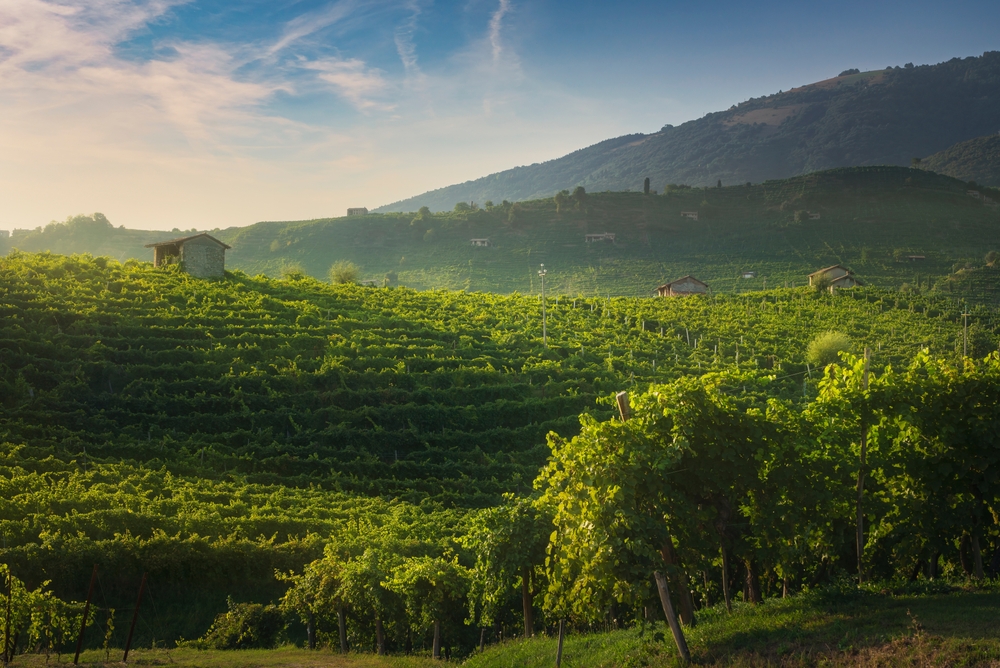
Located in northeastern Italy (in the Veneto region), the Prosecco Hills are distinguished by a ridge-like morphology characterized by parallel reliefs and sharp ridges, with slopes that have necessitated a specific agricultural approach.
The current appearance of the Prosecco Hills is the result of a series of evolutions and “artificial” modifications, the first of which date back several centuries. Beginning in the 17th century, the technique of “ciglioni” (grassy terraces) was developed to make the steepest slopes cultivable. These terraces created the typical checkerboard pattern we can still admire today, with rows parallel and perpendicular to the slope. The result is a harmonious visual effect, in which the regularity of the vineyards intertwines with the natural beauty of the woods, hedges, green patches, and surrounding villages, creating a landscape mosaic of rare beauty.
The region’s evolution, however, didn’t stop there. In the 19th century, to combat fungal diseases such as downy mildew, the Bellussi brothers introduced an innovative vine training system: bellussera. This technique involves arranging the vines on tall poles, with shoots stretching horizontally in a radial pattern. From an aerial view, the vineyards appear as a geometric embroidery of nature, a green beehive that lends rhythm and structure to the landscape and which, even today, requires exclusively manual cultivation, keeping alive the link with rural tradition.
The Prosecco Hills, a World Heritage Site, are not only a visual spectacle, but also a living and dynamic ecosystem that fosters biodiversity. Agricultural practices are closely linked to sustainability: land use still follows environmental conservation principles, and hand-harvesting remains the norm on many plots.
Places to visit in Conegliano and Valdobbiadene
The Conegliano and Valdobbiadene area enchants with its discreet elegance and profound cultural identity; it’s a region best explored slowly, perfect for those who love food and wine tourism, small treasures of art and nature, or even just a weekend in the Prosecco Hills, seeking relaxation and authenticity.
In Conegliano, the cradle of Veneto viticulture and the starting point of the famous Prosecco Hills Walk, every corner tells a story. You can start at Conegliano Castle, which offers a sweeping view of the hills and plain below, then descend along Calle Madonna della Neve to admire the little church with the same name, steeped in spirituality. Walking along historic Via XX Settembre, the beating heart of the city, you pass a succession of frescoed Renaissance buildings, the Duomo with its famous altarpiece by Cima da Conegliano, and the Sala dei Battuti, a little-known artistic gem. To learn more about the painter who brought prestige to the city, you can stop at Casa Cima, where you’ll find a collection dedicated to his life and works.
Conegliano is also home to Italy’s first wine school, the Cerletti Institute, which now houses the Luigi Manzoni Museum (dedicated to viticulture research).
For those looking to stay, there’s no shortage of accommodations nestled in the Prosecco Hills, ideal for those dreaming of an escape from the city. Among these is the Tenuta Ville d’Arfanta estate by Serena Wines 1881, where, in addition to hospitality, you can enjoy a variety of experiences: find out more below, or contact us for more information!
Continuing towards Valdobbiadene, the landscape continues to be incredibly picturesque. The heart of the town is Piazza Marconi, dominated by the Cathedral of Santa Maria Assunta and its 18th-century bell tower. Not far away is Villa dei Cedri, a 19th-century residence surrounded by a large park, often hosting cultural events.
For those who love walking, Valdobbiadene is an exceptional destination: the Anello del Prosecco (Prosecco Ring) is one of the most spectacular routes to explore on foot or by bike, a roughly 15-km itinerary that passes through some of the area’s most beautiful villages, such as San Pietro di Barbozza and Col San Martino. Along the way, you’ll encounter small churches, hermitages, scenic overlooks, and numerous wineries where you can stop for a tasting.
Among the area’s unmissable stops are:
- the picturesque Molinetto della Croda (Croda Mill) in Refrontolo, now operational following a series of restorations;
- Castel Brando, one of the oldest castles in Europe, located in the medieval village of Cison di Valmarino;
- Follina Abbey, a 12th-century Cistercian masterpiece completely restored in 1922.
For nature lovers, Mount Cesen, at 1,570 meters, is an ideal panoramic destination: here, the cheesemaking traditions of the plateau meet the viticulture of the hills below. And for moments of pure relaxation, the Revine Lakes offer peaceful views perfect for a walk in any season.
Finally, for slow tourism enthusiasts, the Cammino delle Colline del Prosecco (Prosecco Hills Trail) is a hiking trail that connects the main villages of the area in four stages, from Vidor to Vittorio Veneto. Along the way, you can enjoy a wealth of authentic experiences: from a visit to a winery with tasting, to the discovery of a small oratory surrounded by greenery, to dinner at a restaurant in the Prosecco Hills where the flavors tell the story of the region.
Hospitality and experiences: come and discover Tenuta Ville d’Arfanta
To fully experience the excitement of a weekend in the Prosecco Hills, Tenuta Ville d’Arfanta (located among the vineyards near Tarzo) is the best choice. This elegant residence owned by the Serena family is an expression of the group’s winemaking tradition, the custodian of a history built on passion and respect for the land.
Serena Wines 1881 offers a series of exclusive wine tourism experiences immersed in the beauty of the landscape that complements the romantic setting of the estate. These include:
- Prosecco Tour, which allows you to visit the vineyards and taste four types of Prosecco DOC and DOCG with a platter of local products.
- Prosecco & Champagne Tasting, a refined combination for the most discerning palates.
- Horseback ride at sunset, for a romantic immersion in the hilly paths.
- Vespa tour and picnic in the vineyard, to explore the area in style and ease.
- Romantic picnic in the vineyard, with a bottle of Prosecco and a gourmet platter.
- E-bike tour, a scenic ride with a tasting stop.
The estate also offers overnight accommodations: its refined and evocative rooms (such as the Serena Suite, a symbol of family hospitality, and the Terra Room, dedicated to the profound connection with the vineyard soil) represent the perfect retreat for a weekend in the Prosecco Hills.
Contact us for more information about experiences or to book a stay at Tenuta Ville D’Arfanta: we look forward to hearing from you.
Additionally, if you’d like to discover all the details about Serena Wines 1881 wines, visit the dedicated website: a unique food and wine journey awaits you, fruit of passion and love for the Prosecco Hills, a UNESCO World Heritage Site!